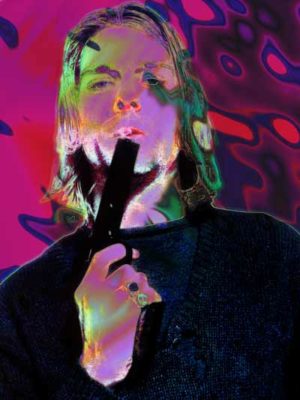
Marilyn Manson has built an entire career on shock, discomfort, and confronting polite society with a middle finger wrapped in eyeliner. But this week, the discomfort isn’t theatrical—it’s legal, and it’s real.
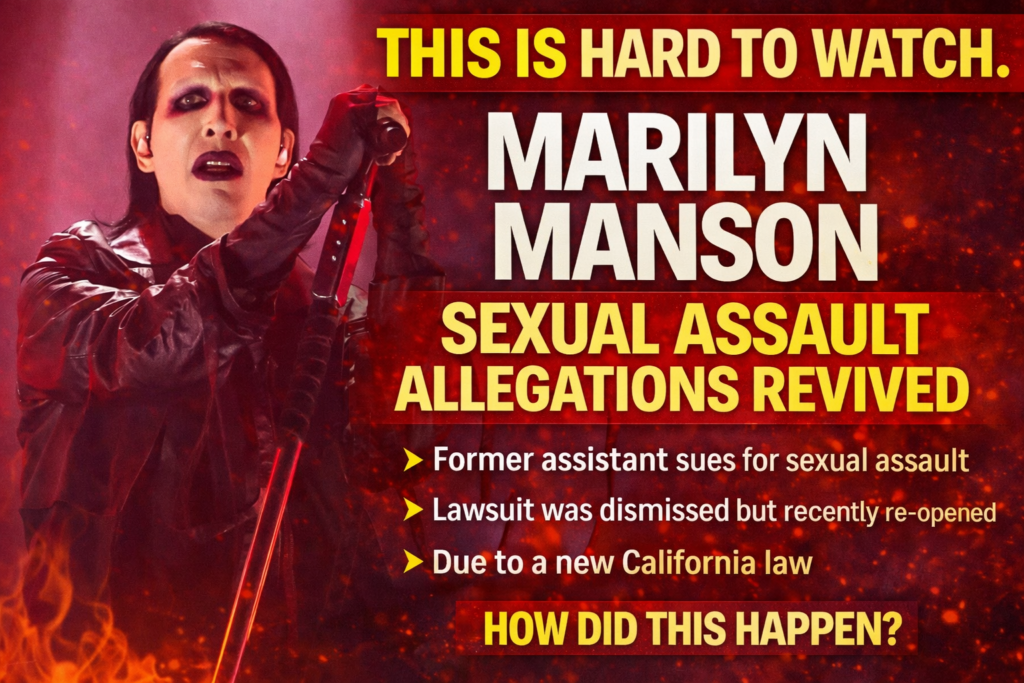
A sexual assault lawsuit filed by Manson’s former assistant, Ashley Walters, is officially back on track after years of courtroom limbo. The case, originally filed in 2021, was dismissed due to California’s statute of limitations—then immediately resurrected thanks to a new state law that rewrote the rules.
Yes, somehow this story got more complicated.
Let’s break it down.
Why the Lawsuit Is Back
Walters alleges that she was sexually assaulted while working for Marilyn Manson (legal name: Brian Warner) between 2010 and 2011. When she filed her lawsuit in 2021, the court dismissed it, ruling too much time had passed.
Enter Assembly Bill 250, a new California law that extends the statute of limitations in certain sexual assault cases—particularly where survivors argue delayed discovery or repressed memory.
The law went into effect after the case was dismissed. But because the same judge still had jurisdiction, the lawsuit now qualifies for revival. A review hearing is set for March 27.
In plain English: the door slammed shut, California kicked it back open.
What’s Been Decided (And What Hasn’t)
Important distinction here—this is not a criminal case.
- The Los Angeles County Sheriff’s Department dropped its criminal investigation last year, citing statute limitations and difficulty proving charges beyond a reasonable doubt.
- This is a civil lawsuit, meaning it will focus on liability and damages, not prison time.
- Manson strongly denies all allegations.
Walters’ legal team argues the new law exists specifically because survivors often don’t process or report abuse on neat, court-friendly timelines. Manson’s camp says this is another attempt to resurrect a claim that’s already failed.
And now? A judge will decide whether it proceeds to trial.
Why This One Hits Different
Here’s the part that’s hard to square—especially if you’ve ever blasted Antichrist Superstar or Mechanical Animals at unsafe volumes.
Manson is a Grammy-nominated artist with platinum albums, charting hits, sold-out tours, and decades of cultural relevance. Songs like “The Beautiful People”, “Sweet Dreams”, and “Tourniquet” helped define an era of industrial rock. He didn’t exactly lack access, fame, or attention.
So when allegations like this surface, the question isn’t just “Is it true?”—it’s “Why?”
And that’s where things get deeply uncomfortable.
If these allegations are proven, it won’t be edgy, provocative, or ironic. It’ll be tragic, gross, and indefensible. No theatrics. No shock-rock excuses. Just real harm.
As a fan? That’s a brutal place to sit.
Where Things Stand Now
- The lawsuit is active again
- A court review is scheduled
- No criminal charges are pending
- No verdict exists
- Everyone involved claims the truth is on their side
This isn’t a cancellation moment—it’s a wait and watch moment. And for a lot of longtime listeners, it’s one that may permanently change how (or if) they engage with Manson’s work.
Sometimes separating art from artist isn’t a thought experiment. Sometimes it’s a gut punch.
Stay Connected to the Music—Not the Noise
If you’re looking to focus on live music that actually brings people together, the Static Live Music Calendar App has you covered—tracking shows across Daytona Beach, Ormond Beach, New Smyrna Beach, Flagler Beach, and more as we expand into new cities.
Because while the headlines get messy, live music is still about the moment, the room, and the connection.