
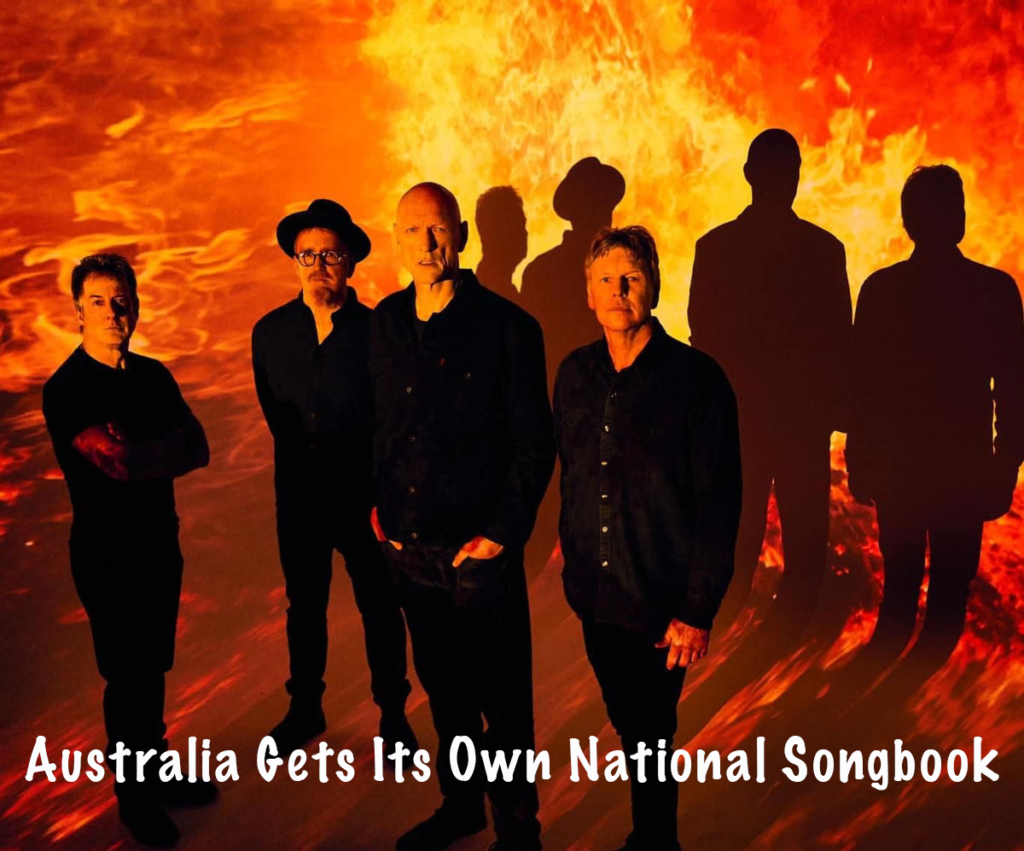
and the First 10 Songs Are Worth Turning Up
We don’t get to talk about Australia nearly enough around here, and I’m perfectly happy to use this as an excuse to change that. A country that gave the world AC/DC, INXS, Men at Work, Kylie Minogue, Midnight Oil and a whole lot of musical talent deserves more than an occasional mention when somebody brings up a funny accent or a dangerous-looking animal. Australia has a deep musical history, and now it’s getting a permanent place to celebrate it.
The first 10 selections for Australia’s new National Songbook were announced November 4 at the National Film and Sound Archive of Australia in Canberra. The project is a collaboration between APRA AMCOS and the National Film and Sound Archive, created to preserve the songs and compositions that helped shape Australia’s cultural identity. It’s also part of a big anniversary year, with APRA celebrating its 100th birthday and the archive marking 90 years.
And the inaugural list is a pretty interesting collection. We’re talking rock classics, feminist anthems, First Nations protest music, electronic dance tracks, traditional Australian storytelling and even a film score. It’s less of a greatest-hits playlist and more of a musical history lesson, which is considerably more entertaining than most of the history lessons I remember sitting through.
The First 10 Songs in Australia’s National Songbook
Let’s start with the one that probably jumps out immediately for rock fans: Midnight Oil’s “Beds Are Burning.” Released in 1987, the song became an international hit while delivering a powerful message about Aboriginal land rights and the treatment of Australia’s First Nations people. Driven by Peter Garrett’s unmistakable vocals and an urgent rhythm, it reached No. 17 on the U.S. Billboard Hot 100 and No. 6 on the UK Singles Chart. It remains one of the band’s most recognizable recordings and one of Australia’s most important protest songs.
Then there’s The Easybeats’ “Friday on My Mind,” a 1966 classic written by Harry Vanda and George Young. The song became an international breakthrough for the Australian band, reaching No. 16 on the U.S. Billboard Hot 100 and No. 6 in the United Kingdom. George Young would later become one half of the legendary Vanda & Young songwriting and production partnership, and yes, he’s also the older brother of AC/DC’s Angus and Malcolm Young. That’s quite a musical family tree.
Helen Reddy’s “I Am Woman” is another essential selection. Released in 1971, the song became a defining anthem of the women’s liberation movement and eventually reached No. 1 on the U.S. Billboard Hot 100 in December 1972. Reddy won the Grammy for Best Female Pop Vocal Performance in 1973 for the recording, making this one of the most internationally celebrated songs on the list. Its cultural influence extended far beyond the charts, and its message still resonates decades later.
The list also recognizes Yothu Yindi’s “Treaty,” released in 1991. The song brought Indigenous Australian voices and the issue of a treaty with First Nations peoples into mainstream conversation. It combined traditional musical elements with rock and contemporary sounds, creating something that was both culturally significant and genuinely infectious. Its remix by Filthy Lucre even reached No. 6 on the U.S. Billboard Dance Club Songs chart.
Electronic music gets its moment with The Presets’ “My People,” a 2007 dance track by the Australian electronic duo of Julian Hamilton and Kim Moyes. The song addresses Australia’s treatment of asylum seekers, proving that a track can get a dance floor moving while still having something meaningful to say. Apparently, not every electronic music track needs to be about partying until sunrise. Some people insist on making us think, too.
The remaining selections show just how broad this collection is. “My Island Home,” written by Neil Murray and first recorded by the Warumpi Band in 1987, became especially well known through Christine Anu’s 1995 version. Ruby Hunter’s “Down City Streets” reflects personal experiences connected to the Stolen Generations and homelessness. Peter Sculthorpe’s “Earth Cry” brings classical composition into the collection, while The Necks’ score for the 1998 film The Boys recognizes Australia’s contribution to experimental and cinematic music.
And naturally, no Australian musical history lesson would feel complete without “Waltzing Matilda.” Written by Andrew “Banjo” Paterson, with a melody by Christina Macpherson, the famous bush ballad dates back to the late 19th century and was first recorded in 1927. It’s one of the country’s most recognizable cultural works, and its inclusion makes perfect sense.
The American Connection: Australia Has Been Making Noise Here for Decades
One of the interesting things about this collection is how many of these songs crossed the Pacific and found audiences in the United States. Helen Reddy’s “I Am Woman” became a No. 1 American hit and earned a Grammy. The Easybeats cracked the Billboard Hot 100 with “Friday on My Mind,” while Midnight Oil took “Beds Are Burning” into the U.S. Top 20. Yothu Yindi even made an impression on the American dance charts with “Treaty.”
Those are meaningful achievements, particularly when you consider that Australian artists were competing for attention in a music industry dominated by American and British acts. These weren’t just songs that mattered back home. They traveled, found audiences, and helped introduce American listeners to Australian artists and stories.
Helen Reddy’s Grammy win is the standout U.S. award among the inaugural selections, but the chart achievements tell their own story. Sometimes a song doesn’t need a trophy to prove its impact. A place in the cultural memory of an entire country is a pretty impressive achievement on its own.
This Is More Than a List of Old Songs
The National Songbook is intended to become a permanent digital archive, with new selections added annually. The songs are chosen by an expert panel that includes people from the music industry, songwriting, broadcasting, journalism and academia. To qualify, a work must have been written or co-written by an Australian APRA member, released at least 10 years before consideration, and demonstrated significant cultural impact.
That last part is important. This isn’t simply a popularity contest or a list of the biggest commercial hits. Some of the selections are recognized because they helped change conversations, preserve cultural experiences, or give a voice to communities whose stories haven’t always received the attention they deserve.
The inclusion of First Nations artists and compositions is particularly important. Songs like “Treaty,” “Down City Streets” and “My Island Home” carry histories and perspectives that deserve to be preserved and heard. A national music archive should reflect the full range of the people who make up a country, not just the songs that sold the most records.
You can explore the collection and listen to the official playlists through the National Film and Sound Archive of Australia, with playlists also available on Spotify, Apple Music and YouTube Music.
Australia, I’m Coming Someday. Just Don’t Let Me Near the Bar Too Early.
I’ll admit it: Australia has been on my travel wish list for a long time. I’ve always been curious about the country, its landscapes, its music, and especially its people. From everything I’ve experienced, Australians are some of the friendliest people you’ll run into.
I learned that firsthand in Las Vegas when I somehow ended up making friends with a group of about 20 Australians. They invited me to spend the afternoon drinking with them, and let’s just say the afternoon got away from me. I don’t remember a whole lot about the rest of that day, but I do remember having a pretty good time. That’s probably enough said about that particular travel experience.
Then there’s the accent. It’s contagious. One of my kids went through a stretch of about six months where he spoke almost exclusively in an Australian accent. At one point, a waiter at one of our favorite local restaurants started having full conversations with him, both of them leaning into the accent like they were auditioning for a role in an Australian television series. It was absolutely hilarious, and I still don’t know how long the waiter planned to keep the bit going.
So congratulations to the artists, songwriters and composers whose work is being recognized in this first National Songbook class. These songs represent different generations, cultures and musical styles, and they deserve the recognition. I’m looking forward to seeing what makes the next annual selection.
One small request for the next round: let’s get Men at Work’s “Down Under” in there. If we’re celebrating Australian music, how do we leave out the band responsible for one of the most recognizable Australian songs ever recorded? I’m just saying, the land down under could use a little more Men at Work.
And if anybody from Australia is reading this, consider this my official invitation to recommend a few places I should visit when I finally make the trip. I’ll bring the curiosity. You might want to keep an eye on the drinks.
For more music history, new releases, concert news and stories from around the world, keep following Static Live Magazine. Our Static Live Music Calendar app helps fans discover live music along Florida’s East Coast, including Daytona Beach, Ormond Beach, New Smyrna Beach and Flagler Beach. We’re working toward expanding into new cities, because there’s a lot more music out there to discover.
Check out the app at https://staticlive.app/ and keep the music playing.